Showing posts with label Personal. Show all posts

Sunday, July 19, 2009

Seeking Balance

Originally, this blog was started to communicate with my children, but they long ago ceased reading it and I don’t blame them. It has become too concentrated on topics of little interest to them, and even abrasive since they are still in the years of learning a profession or skill to earn a living, not yet in the years of earnings, saving, and investing.

It has also become too concentrated even for me since I do have other interests, over concentrating for the moment perhaps to allow the pain of my mother’s passing to subside. Perhaps, it now has and I can return to a more balanced life, thus blogging with more balanced attention to other topics. There are more than a few that I wish to attend, but also will continue to follow ideas for trading and investment.

Although I’ve expended more time on investment and trading, I receive most hits on the spiritual topics, specifically the Eastern mantra “Om Brzee Namaha” and Lakota wisdom “Hoka Hey.” The mantra commonly appears fourth in international Google scans, indicating I’ve done something well. It is my mission to help others progress in life, and hits on these topics are those seeking wisdom.

There are also other topics that seem to receive either insufficient coverage, or rabid coverage from both sides, neither of which is complete, balanced, or even workable. For these areas, I wish to add a voice of balance, even if my voice is but a whisper in the hurricane. At least it will have been said. These will appear under the POV (Point of View) category.

To those few who do check in from time to time for investment and trading viewpoints, they will not go absent. It is still important in the spectrum of things, and the one avenue of escape for those who wish to leave the indentured financial status of normal society. That, too, is a topic of acute passion on my part.

Saturday, May 30, 2009

Worldview Changing Books

From time to time, I become aware of books that alter my worldview. I wish to share these books and what it is about them that makes them, at least, in my opinion, worldview modifiers.

These come, I note, in two varieties, and perhaps, three. The first is how I view my world, but does not necessarily change my life up close and personally. One example of this type is Before the Dawn: Recovering the Lost History of Our Ancestors. This book discusses the knowledge now available about man through analysis of his DNA. Intriguing, but won't make much, if any, difference in what I do today or tomorrow, save reading more on the topic.

The other type book has great impact on what I do, today and tomorrow, and perhaps for the remainder of my life. An example of this is The China Study: Startling Implications for Diet, Weight Loss and Long-term Health. Basically, it lists the ways in which the majority of Americans are adversely impacting their health and longevity, and how a diet change can reverse those effects.

A third type would be books I've found that have major impact on personal finance. An example of this category would be Bollinger on Bollinger Bands. Finance may be regarded as a necessary evil, but the keyword is "necessary." Doing it right reduces that percentage of time and cognition demanded to satisfy this necessity, not to mention can provide a great deal more of the resources making other pursuits possible that otherwise might not be.

The idea, here, is to share these findings so others can enjoy the benefits I have derived. That simple. Most of these came to my attention because someone else took a few moments to share their experience, and I repay that gift in turn. In some cases, such as The China Study, brought to my attention by Elizabeth, my favorite middle daughter, it is the gift of life itself--or at least more and better life. Before the Dawn was from a surgeon during a followup visit. I, in turn, told him of The Singularity Is Near.

I will treat each of these books individually. Their entry here is as examples to help clarify what I intend. Hopefully, you will find these entries of benefit, and will let me and others know by adding comments to an entry. Also, please, do add comments on alternative sources that you have found beneficial. Thank you in advance for your contribution and caring.

Thursday, May 21, 2009

Personal Purpose

In an environment of parties disinterested in the well being of the average citizen, I can do little to offset those adverse interests. However, I can help individuals and families to offset the constant drains on their finances. In doing so, I contribute to the strength of my country. The true underlying strength of a capitalist country is the financial strength of the citizens, even though governments tend to overlook this and act adversely to citizen well being.

This seems one of those times. I worry that my government has become "the best government money can buy"—but counts its citizen as money extracted by force of law, thus not of influence.

What I can do is continue to improve the already designed system to invest an individual’s funds to provide an extraordinary return, teaching that system to as many as possible. This allows persons to realize the American dream of working, saving, investing, and becoming financially independent if not downright rich. I do this both for my own children and all those who would personally like to better themselves. They thereby better their families and their countries.

What I provide is a simple technique for extraordinary return on capital invested during both bull and bear markets. I offer the entire technique herein, teaching how to employ it so no other expertise it needed. In short, should you save money from even the modest earnings of an ordinary citizen, this technique allows you to realize the dreams of capital accumulation of a capitalist country. It provides you the control of your own financial future.

Good luck, do good, avoid debt, and teach your children this independence and aspiration so they can do even better than you. Alert your friends that this opportunity is available to them, too.

The technique is summarized in the entries marked TRADING. A lab course of these techniques applied is found under FAS-FAZ, TNA-TZA, and ERX-ERY. I will probably add others in the future. Should you have suggestions for improvement, please, share them. If you have questions, they are welcome.

Above all: Live long and prosper!

Tuesday, May 5, 2009

Choosing a Path

Look at every path deliberately. Try it as many times as you think necessary. Then ask yourself and yourself alone one question....Does this path have a heart? If it does, the path is good. If it doesn't, it is of no use. ~ Carlos Castaneda.

It seems the time has come to choose how I will expend the rest of life. The hardest question I've always faced is, What do you want? I've always envied those who seem to know, for I did not, and still don't, it seems. However, I am gaining on an answer.

In 1999, having survived surgery, a life review discerned "I have not loved well." This review showed those achievements, pride of a lifetime, were of little consequence besides this pronouncement. It was not a judgment in the sense of assigning blame, just analysis of a life lived.

Whether that life was finished then or not was my choice, but the consequences of either outcome were clearly known. If I returned, I would have years of tribulation and aloneness; if I did not return, Mother would have a shortened lifetime and a daughter would have unresolved issues that I might otherwise help with. I chose life, but retained some comfort from the peace of death.

To buffer the coming years, I assumed the goal of becoming enlightened, though I had no real idea of what that meant. I remain unsure and have lightened intent of that achievement. It will come or not, as it will.

A second intent, assumed years later, was to experience a relationship with a significant other, to love and be loved, at least once this lifetime to love well. With lack of skill, I have felt the pain of failure since. But the failing and the pain do not discourage continuance of intent.

Now, that Mom has gone, with the responsibility of her hospice care well performed, I realize that was another step in this task to learn to love well. Now, I again seek a life's love so I might complete this life mission. I look forward to finally getting it right.

That, then, is the path I choose. Though I may perform less than I would desire, I do feel it a path well chosen. Tis a path with heart.

Wednesday, April 29, 2009

Squirrel World

I put out eats for birds and squirrels, especially in the winter. During the summer, I tend to let it run out for a few days to encourage them to seek food from their natural sources.


Worked pretty well except for one young, female squirrel, whose reaction was to come close to the door, voicing her displeasure that I was remiss in my duties. Much of the time, I could not resist her admonishment. When I did, she waited until I was taking a nap, then came into the room, raiding the food bag directly, leaving a mess on the floor to perhaps have me rethink any future tardiness. I did.

She willingly provides a refresher course whenever needed. I happily report I've become proficient in avoiding further instruction. She seems smug she's shown me my life's purpose and I fulfill it.

Friday, April 24, 2009

The Eyes Have It

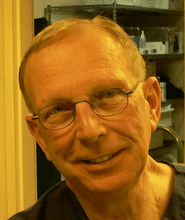
This may be the last photo of me with glasses. This afternoon, I undergo surgery to correct my vision, and I am of course nervous in spite of overwhelming odds of everything coming out for the best.

My two eyes have become sufficiently different to be frustrating. I compose this with glasses on and one eye shut. My previous reluctance to surgery was the adverse night and low-light vision consequences. Stargazing means that much to me. The newer procedures both minimize this disadvantage, plus correct the very fine anomalies of the eye. 20/15 outcomes are not unknown.

On the other hand, having to maintain two pairs of prescription glasses would cost far more over the years than the surgery. I may still need glasses for reading and computer work, but they should be a lower-power reading glasses available inexpensively.

Wish me luck.
----------------------------------
Saturday, April 25, 2009: Surgery completed and I'm back home. I can see close up magnificently (e.g., I can see fingerprint swirls without glasses), but far vision remains blurry. It is approximately the same level as my vision was before, but in the opposite direction. This, I am assured, is temporary and my vision will shift to improved distance vision and the near vision may decrease to the point I need reading glasses.

I can at least say at this point, both eyes seem equal. They are terribly sensitive to glare, but sight under low-light conditions seems sensitive with only the same focus problems mentioned above.

I do find it amusing that I've been issued a prescription for -1.00 and before the surgery wore +1.00 for general seeing (other than reading). It will improve, say they; it will improve...
----------------------------------
Sunday, April 26, 2009: Vision seems same as yesterday, focusing well on anything within less than an arm's length, but unfocused with glare orbs at distance. A couple of times it bordered on vertigo. I actually am more light sensitive, and turned down the brightness of the TV to much less than it was.

I've thought of making a distance range that would allow me to easily and accurately compare two days, especially to determine if vision is shifting to give better sight at a distance, but have yet to come up with a good idea.

I think things are a bit better today, but I'm not sure if they are or I'm just a little better adjusted. That's why the desire for some kind of objective measure.
----------------------------------
Monday, April 27, 2009: Ordered new -1.00 prescription glasses. They should be available Saturday. Still find it amusing that I have spent a lot of money to convert my +1.00, $15 reading glasses, for -1.00, $47 prescription glasses.
----------------------------------
Tuesday, April 28, 2009: Seems my prime focal point is moving away from me. Things don't start to blur until around three feet where a couple days ago it was inside two feet. Initially I remember moving the laptop 12 inches away to bring the print in focus. Now it is okay at 15 inches, but the brilliance of an all-white background are still a bit much. I prefer the black background of this blog, but even the white letters and lines have a aura around them, like the negative version of a penciled line erased and rewritten.
----------------------------------
Thursday, April 30, 2009: Nothing special yesterday, so didn't post. Today, vision seems the same, plus I seemed to have rubbed the right eye the wrong way so it seems extra sensitive to glare and a bit blurry, but comparing it the left, it is the same--with fog. Suspect no real damage, and using the up-close vision, no damage is apparent.

Wal-Mart Vision Center just called, saying new glasses are in two days early. I Wonderful, since that will allow me to drive down tomorrow without the world being unfocused as it has been all week. Perhaps the universe is indeed looking out for me.

I am beginning to get used to the idea that I may forever need distance glasses but will not need reading glasses. Perhaps, should my eyes regain their strength of youth, I can again read a book-a-day in unending stream. Perhaps a bit of Faustian bargain is going on. Yes!
----------------------------------
Friday, May 1, 2009: Got my one-week checkup and was told I am improving and the symptoms still experienced are all normal. I still suspect I shall not recover to the point I have distance vision without correction. Another person there for his one-week checkup has had good distance vision since his surgery, the same day as mine. Somewhere, someone recorded or didn't read something correctly so I came out different than desired. We'll see.

Sunday, April 19, 2009

Sunday Showers

The weather today: Overcast with the light rain scheduled this afternoon already arrived. Seems an appropriate match of mood and mind. I am tired from a drive of 16 hours over the previous two days, with the sadness of mission, interment of my mother. I continue to hold mourning at bay, but sense for not much longer. This intuit stems, I think, from seeing how extraordinary the people I assembled with, and how extraordinary Mom and the people she now rests with.

Mother, Grandmother, Randall. Ordinary people who expended their lives attempting ordinary extraordinary feats, and succeeding. Theirs is a reality version of the hero myth; they momentarily brazen the universe, knowing they will not survive, yet somehow prevailing, doing their best even when their best may not be so very good somedays.

All these thoughts swirl through me, at first in night dreams, now through dreaming insights of the day. These are not whimsical daydreams, but vivid visual snippets just below consciousness, which pop through from time to time as would ship or shoreline from the fog. I suspect these the first symptoms of expected tsunami.

I welcome its overwhelming cleansing, this mourning. I've waited much too long, as if I had a choice. I know the longer the wait, the greater the wave--and this one is big!

The paradox of the experience these last two days, was the joy a refreshing old ties, of seeing and talking to relatives long missed in the imerative of the immediate. It is perhaps another lesson Mom teaches even in her absence: Do not lose the important to the immediate. It seems a lesson we all repeat endlessly, and need yet again. Foolish on our part.

These sadnesses become the showers of our lives, telling us once again, what we will probably soon forget...but maybe, just maybe, not this time. The universe has patience, endlessly repeating these lessons.

These are our Sunday showers.

Thursday, April 16, 2009

New Leaf

The time has come (the walrus says...). The extra weight put on in the last few years is coming off! It has gotten to the point of being hazardous to my health, so I shall simply not tolerate it further. That's the easy part, now down to the hard part...

I've acquired a couple of hand weights and an Iron Gym, the chin-up bar that fits in a doorway. Landlady has already expressed concerns that her doorways may not support it. Oh well, if not, ... we'll find out.

I've also ordered 10-Minute Trainer. Obviously I'm serious. Diet-wise, I've cut out red meat (worked last time) and have gotten some Lemonade mix with zero calories instead of the previous 60-calories per serving. I'll eat more fresh salads, which I enjoy.

I am determined to return to an ideal weight which I consider around 187 lbs, my weight coming out of boot camp. I weighted 167-lbs out of high school, then 13-weeks later, 187. I've weighted 203 when doing heavy lifting and walking miles each shift, but no longer plan lifting more than me on the pull-up bar. If the effect of 10-Minute Trainer is as good as advertised, it should come off in perhaps three months, but, even if not that successful, should have me feeling better.

Wish me luck.

Friday, April 3, 2009

Light Reading

After a few days of math and physics, of psychosocial, of investment, enough! I need something that just sucks me in and disappears time and self, absorbing me into a different world. In this case, it is Dune House Atreides (1999), by Frank Herbert’s son, Brian, and Kevin Anderson. It says it was written from Frank Herbert’s notes.

In my older years, I now consider Dune (1965) the best science-fiction novel, and Frank Herbert one of the best sci-fi authors. The novel's background thought overwhelms with its suppression of technology to get at the intrigue of potential human development and variation.

My previous favorite was Robert Heinlein’s Starship Trooper (1959), mostly because of its military culture and social constructs. For example, all officers of the Mobile Infantry, Heinlein’s equivalent of Airborne, were drawn strictly from its enlisted corps, thereby assuring meritocracy of its officers. Further, the worldwide society gave franchise only to those who had served society either through military service or through other service requiring risk of life. The idea was not that they voted any better, but they had demonstrated at least an ethnocentric level of responsibility. They had put their society above themselves. The book held women as physiologically and psychologically more capable pilots than men, a concept rare in 1959--or even now.

I note the psychosocial thread running through my choices. It is a fascination that still functions with my latest interests in Lawrence Kohlberg and Carol Gilligan. Apparently it has moved out of sci-fi and into reality. I’ve long been aware that science fiction often rewrites the classics in a modern or future society’s context. For example, Heinlein’s best is normally considered Stranger in a Strange Land (1961), which is a rewrite of the story of Christ, a quite good one I realize in my later years.

Perhaps that is why I always thought Heinlein the best science fiction author, above the seconds, Arthur Clarke and Isaac Asimov. I rated them thus even after much of Heinlein’s future history had been overtaken with real history, but I gave much of that credit to Heinlein being a graduate of the US Naval Academy (Class of ’33, if I remember right). He was discharged from the Navy on disability and wrote his first science fiction story in 1939, “to pay the rent,” as he put it.

Although Heinlein, Asimov, and Clarke were the “Big Three,” I also liked Fred Hoyle, both for championing the steady state universe (he coined “Big Bang” as a derogatory term) and for his science fiction novel, The Black Cloud (1957). A cloud in space turns out to be super-intelligent life and communicates with man. It is as surprised that life can form on planets as man is surprised to learn the cloud is alive. It turns out helical structures can form from inorganic matter, so such life is indeed possible, thus probably exists. Hoyle also first proposed the formation of heavier elements in the cores of stars.

Asimov, of course, wrote extensively about robots, formulating the Three Laws of Robotics, regulating robots in their rise to intelligence. He was also one of, if not the, most prolific writers ever, with over five hundred books published in his career. His short story “Nightfall” (1941) is considered by Science Fiction Writers of America as the best science-fiction story ever written.

Clarke wrote of man’s history and transformation in the series starting with 2001: A Space Odyssey (1968) which is rated among the top ten movies ever made, and included HAL, the sentient computer who attempts to take over the mission by eliminating the crew. Clarke is also the “inventor” of orbital satellites, and the geosynchronous orbit of communications satellites is named the “Clarke orbit.”

In reflection, I am amused and amazed how the creations of these authors are woven throughout my life and have played a seeding stimulus throughout it. Light reading turns out not very light at all, but the light of a lifetime.

Monday, March 30, 2009

Mathematics Again

Before I retired the first time, I thought once retired, I would learn mathematics, truly learn. I never got around to it, so I will try again now that I am retired, again ("retired, again" sounds redundant somehow; i.e., "tired again, again." Some days I live down to that.). I started today by purchasing a self-teaching mathematics book, plus two more physics books ("A physicist is a mathematician with a feeling for realty." ~ Norman Packard).

The reasons for this passion are several.

First: Of four children, three are in school learning new things. I feel left out, a slacker. I've also discovered the local college has a senior project that is about learning, but it doesn't recycle semesters, years, whatever, until July. That seems a long way away.

Second: It's good for self-discipline, and that I perceive after too many decades as one of my chief problems. I have an outer persona that appears dedicated and over achieving, but I live on the inside where I know different.

Third: Anyone not knowing mathematics is really illiterate, and I really feel that way when reading physics, etc. It's a major hole in my education (I said "a," not "the") and one I would heal over. I dislike feeling illiterate almost as bad as being illiterate.

Should some future entries become even more "glaze-'em-over" topics than already, you know the reason. If I am really good, I'll see about turning the topics into "programmed instruction" as spoken of in a previous entry. It's only fair I put production where my mouth was. If not too time consuming, I shall. Hopefully it will help those who like me made it through high school mathematics with lots of holes (mostly from not attending the topic in class and homework). The effort makes up some negative karma perhaps, but the real karmic costs were the opportunities left unavailable.

Audacibus adnue cœptis. ~ Virgil, Aeneid
(Favor daring undertakings.)

Monday, March 16, 2009

Isolation

The last couple weeks while waiting for tax refunds and retirement benefits, I’ve been on a pinched budget. The one luxury I’ve allowed myself, not knowing when monies would appear, is going to the coffee shop each morning to post to this blog, and receive/answer email. That time was usually limited by battery life, which has diminished over the years. While in my room I do not have access to the internet.

It has made me aware of isolation, and how it can kill the elderly in a few years. Even having internet access could make a tremendous difference, for me, anyway. There is no doubt many elders who have never used it and would not take to it. Thankfully, I’m not one of them. Once monies arrive, that is the initial item on my to-do list.

When involved in mom-care, I had both access to her retirement-living staff, the hospice staff, and a DSL internet connection. Scaling back to none of these is tough. Before, even on days off, I borrowed John’s internet modem, so felt connected to the world.

Other planned involvements include an exercise program, a stringent one needed to quickly regain physical conditioning. That should improve attitude in the same manner that one cannot feel depressed when walking. It should also improve blood pressure, cholesterol, etc., not to mention make me feel good about myself, both for the physical shape and the successful self-discipline. Since this is an alone activity, it may not readily appear connected to isolation, but it very much effects the feeling.

I’ll also explore various course options to determine if there might be some of interest that will get me out of the house and in contact with others. These could include AB Tech, UNCA, and ad hoc study groups available in the community. I still have a desire to learn mathematics that I thought I would do after retiring. Since I am retiring again, I’ll consider it again. Perhaps I could even mentor an adult course of some type; e.g., investing.

Another list of to-do’s includes some dental work and some eye work. Both have been held in abeyance until the monies and Medicare were available. That time has come, it seems. These will provide a boost in self-esteem, which definitely improves the adverse effect of isolation.

With all these newfound advantages, I might even try internet dating, with great hopes of ending isolation. As you can tell, I am determined not to die of isolation, now or later.
----------------------------------
I’ll also be thinking of what I might do to reduce isolation in other seniors. Perhaps mentoring them in internet contact.

Principles and Values

It suddenly came to my attention that I could not tell you my principles and values, yet it strikes me as vital that I should be able to. I am sure I have them since I've acted against self-interest for others, yet have hurt others and myself when later I discovered some absence.

This became evident when Glen Beck was on TV talking about the topic. He only mentioned he has his, so later I went looking for them on the internet. They seemed a little thin to me, so I’ll not use his. His seemed merely a list of things that make him an egocentric conservative, vitally interested in ratings. I had listened to him for a few weeks when he was on CNN, but ceased and unsubscribed from his newsletter. They asked why I was unsubscribing, but I resisted telling them it was because I not heard anything constructive in the weeks I listened. Although I found his principles and values a bit thin, perhaps he is improving. Good.

One of the first items I think of is religion’s ten commandments, but these seem a bit dated and thin; for example, “Thou shall not kill.” Seems simple and straight forward enough, but there are numerous unstated exceptions from killing enemies in war, criminals for crimes, others in self-defense, and animals for food. Vague. I like the simplicity of statement, but it is too simple as Einstein warned, although in reference to science.

So, all I can say at this point is that I shall be working on this task or project, both for my benefit, as well as for potential use by others who would like a specific, teachable statement of principles and values.

If anyone would, please, do offer suggestions and rationale through comment. Thank you in advance for your response.

Saturday, March 14, 2009

A Different Kind of Friday the 13th

This morning I had a pleasant experience all-the-more so because I was expecting the opposite. I went the local Social Security Administration office to check on my retirement benefits, expecting long delays and polite, disinterested bureaucrats. Instead, I was treated to the most professional and personable interview resulting in benefits starting next month. And I was out in 45 minutes.

Those ladies pose a serious threat to the reputation of bureaucrats.
Thanks, ladies.

Awe and Gratitude

From time to time, I awake without feelings of awe and gratitude, and know I had best get my attitude right before I have a bad day. But some days I awake and don’t even realize I’m not feeling awe and gratitude. On those days, the universe sometimes responds with impish humor and gives me a really extraordinary experience, one so extraordinary I cannot fail to recognize it.

Friday was such a day. Afterwards I walk around with such a smirk-smile on my face, people wonder what I’m getting away with. If they only knew... If they only knew…

Thursday, March 12, 2009

A Personal Pause

I’ve been trying to go though containers from Mom’s at a rate of one per day. Occasionally, like today, I open one still too difficult to get through. These usually contain Mom’s photographs from years ago. Today, I ran into three in a row, and just could not attempt a fourth. I carefully bundled each as it was and left it for another day. What I hope to do is scan each photograph and place it online for all to have, but not yet, obviously.

This, too, might explain the various entries on topics far from personal. It’s all part of the holding things at arms length, which, based on past experience, lasts approximately thirty days. I am about half way to then. We’ll see.

Sunday, March 1, 2009

Stargazing

Liz suggested I go stargazing—often. I agree. I’ve long been one, even back in high school when I did my science fair project on observing variable stars (won second place, too). Later, I loved midwatches (12-4 a.m.) on the diesel electric submarine, when we were surfaced and laying to in the Gulf Stream. Even at sea level, stars are bright in the no-light areas of the ocean.

Since moving to the mountains, I've spend days wandering the Blue Ridge Parkway, enjoying the mountains in the day and the heavens at night. It is tremendous for the soul.

Now that mom-care is over, I shall resume the practice. It provides, as Liz points out, a healing influence. With spring rapidly approaching, lying out all night becomes an attractive thought. Watching stars rise and set hours on end provides some kind of devout contemplation that sets aside and renders harmless all cares of the mortal world. It is stardust observing stardust.

Thanks, Liz.

Tuesday, February 17, 2009

Exit 5—The Coming of the Borg

It's a poor sort of memory that only works backwards.
~ Lewis Carroll, Through the Looking Glass


I have no idea if this scenario relates to reality at all, but it fulfills a childhood dream--dream here meaning a vivid, while asleep, repeating dream, not a life goal (although making it one is not unattractive). I will say that I’ve had a reliable intuition about the large events of my life, thus the Exit numbers. Each represents, I think, a possible life exit, numbered by order of occurrence during my lifetime. Three I’ve successfully evaded, with help; two are pending. If I can successfully evade Exit 4, Exit 5 becomes the final exit—the one where I become a star ship, literally. Actually, I become the computer in charge—or specifically, my mind and personality become embodied in that computer. Allow me to explain.

In the 1960s, modified to its present form in 1975, Gordon Moore, co-founder of Intel, formulated a growth curve for number of transistors on a chip vs. time (and cost). Basically, the transistor count per integrated circuit chip doubles every two years, thus provides a benchmark for computer performance doubling every two years. It's called Moore's Law.

Computer chess illustrates this exponential capacity growth. In 1989, IBM mounted an effort to successfully play championship chess, and in 1997, Deep Blue beat world chess champion Garry Kasparov in a six-game match. Deep Blue, backed by an IBM department, was a supercomputer enhanced with 256 special circuits built specifically to play chess, analyzed 2,000,000 moves per second. After winning, IBM dismantled Deep Blue.

In 2002, chess program Deep Fritz played world chess champion Vladimir Kramnik to a 4-4 tie. Deep Fritz ran on a network of six PCs. In 2004, Kasparov’s chess rating was 2795; Kramnik at 2794. In 2007, Fritz 9.0 was rated 2803, 20 Elo points below the chess-program leader, Rybka 1.0 (Russian: "Little Fish"). Fritz listed for $51.28, executed on one PC, and played Kasparov to a 2-2 draw.

Projecting into the future, Moore’s Law predicts a computer with similar capacity as the human brain by 2018, and, by 2028, that computer costs under $1000. This assumes photolithography will be replaced by other abilities to create increasing density chip equivalents past x-ray lithography limits. Confidence is high based on three factors: 1) Integrated circuits are still 2-dimensional constructions; nanotech engineering could enable building 3-dimensionally, with the additional heat offset by use of super-conducting material. 2) Metamaterials which are now being thought of as potentially providing stealth like a Klingon Bird of Prey because of light-bending capabilities. The real potential lies in photon vs. electron computing, because photon computing is faster and not restricted to binary. 3) Quantum computing uses the magic of superposition and entanglement.

Although Moore’s Law was not meant to predict in this arena, it appears to validly do so. Continuing into the future, a computer of the year 2068 thinks all thoughts of all men in all of history—in one second. In 2088, this computer measures 1-cubic centimeter and costs $1000. With nano-engineering, it self-repairs and self-replicates. Man ceases as the apex species. Further, this new species is long-lived and ideally suited to space travel. Its food is the energy plentiful in space.

An individual’s existence continues by being scanned and uploaded. In Star Trek, the teleporter disassembles the person to be re-assemble at a different place. In other words, it replaces the original person with a duplicate. Uploading to a computer is similar, except the replicate is, if you would, Homo silicon rather than Homo sapien. Our machines do not replace us; we integrate with them. This perhaps started in 2004 with the surgical implant of mouse controls into the brain of a quadriplegic.

From this backgrounding, one can see that my original childhood dream becomes a definite possibility, and certainly improves my original view of my brain being extracted and stored in a nutrient jar, hooking sensor and control circuitry to nerve endings. I would rather be Borg.

However, I'll not become Borg if I cannot evade Exit 4, but that's a different story for a different day.
-------------------------------------
The merging of man and machine is covered extensively by Ray Kurzweil in The Singularity is Near: When Humans Transcend Biology.

Saturday, February 14, 2009

Childhood Dreams

Three vivid dreams repeated during my childhood. They shocked me awake each time they occurred, perhaps explaining why I remember them to this day. Their meaning I can speculate on though I really do not know. I do know they were reality stretchers, then and now.

First, and most distressing, I was a 17-year old, replacement soldier of the Waffen SS, fresh from years as a Hitlerjungend, traveling across Russia towards my assigned unit. While in line for a meal, a Russian youth, younger than I, shot me fatally in the stomach. Perhaps you can understand why this would jolt me awake in a cold sweat. Had it not repeated several times in exact detail, I probably would not have remembered it.

The second such shocking dream was being the 15-year old Russian youth who shot the German youth of the previous dream. After shooting him, I was kicked to the ground and shot through the neck by another German soldier. This one, too, repeated, but not as often.

The third was being an interstellar spaceship—not manning it, being it. Data from the various hull-mounted sensors came directly to me as if the sensors were appendages. Later, when awake, I would imagine some kind of brain-in-a-jar scenario to explain this, which was a popular science fiction scenario of the black-and-white movies. Today, an alternate explanation better fits: My personality and consciousness is uploaded to the computer controlling the ship. I am the Borg. I now think of this as Exit 5. More on Exit 5 in later post.

Strange dreams, but then, again, I was a strange child.

Wednesday, February 4, 2009

A Tart Experiment

In an experiment to deepen hypnosis, Charles Tart, Psychology Professor at UC Davis for 28 years, had two graduate students, both deeply hypnotizable and versed in hypnosis, induct each other into a trance. The hypothesis being tested was that the mutual trust between a hypnotist and subject would deepen the hypnotic level attained. It worked—extremely well, with a surprise.

During the session, the two subjects began visualizing a beach, complete with sparkling sands, champagne seas, and crystalline rocks—an astral world. They also ceased talking, but continued relating in this astral world vividly, as if actually experiencing it. Post-session interviews determined the subjects had experienced the same environment and events even though they had ceased talking—at least out loud.

After the sessions, the experiences were so real and so unusual that the two students refused further sessions and the male student ceased hypnosis work altogether.

This experiment is documented in Tart’s book: Altered States of Consciousness.

The import of this experiment is tremendous:

First, the experiment is easily testable by any two people, and can be done without anything other than some hypnosis training. Knowing the expectations should alleviate the fears aroused in the original subjects. The world visualized was simply an astral world as described often in the spiritual literature of Victorian-era England.

If the experience is reproducible, a couple could explore each other in incredible detail, in heart and soul as well as physically. The Star Trek “mind meld” comes to mind. Could an intimate couple exchange roles, or feel what the other feels as they feel it?

Just shear adventuring appears to greatly exceed what is available from the likes of Xbox, Wii, or even multi-million dollar simulators.

This experiment also perhaps explains the knowledge and wisdom teachings documented in the literature of shaman-apprentice mind transfers—educational mind melds, so to speak.

If this consciousness state is possible and can be readily reproduced, the potential is staggering—and scary—which may explain why it has not been seemingly repeated in the almost 40-years since Tart’s book was originally published.

I have my Master Hypnotist certificate. Now I need…

Tuesday, February 3, 2009

Phase Shift

I find myself in the midst of one of life’s phase shifts, the one into old age. Advise is to embrace any shift as being for the best, and one might as well. It’s inevitable. In spite of that, I still dream of myself as in my late twenties, early thirties. Somewhere down inside, I’m not shifting apparently.

It has been happening for years, this giving up of those things of life such as career, power, money, glory, to follow an inner direction of discovering one’s highest ideals and a reason for being here. I am told that giving up may be a grieving process, and I recognize that process.

This season is Autumn and the Metal Element. The metal element is “paring down” one’s life to focus on what is of ultimate concern. In traditional Chinese medicine, the lungs and colon are the organs of Metal. The lungs breathe in new life and spirit; the colon lets go of waste.

My view is now to determine what was and is possible, and how it might be realized. This is not just for myself, but for others close to me, from family to country to world. Morals and caring, it is said, move from egocentric, to ethnocentric, and finally worldcentric. This is a “line of development” discovered by my civilization, and will receive a great deal of attention in coming posts. It allows peering inside the wisdom traditions from all of history and all corners of the world, to discover their strengths and weaknesses, and thus how individuals and societies might progress. This has become important to me.

I would love to make a Faustian bargain for all knowledge but there seems no one to bargain with, probably because they know now they loss in the end. I shall have to muddle along on my own, and perhaps find someone interested in sharing these ideas. That would be nice. Einstein, I think, made a great mistake in not following up on his promise with his first wife. He won her hand by promising to talk physics with her, allowing her to participate, as she could not otherwise because of her gender. After marriage, he did not, and finally had to promise her his Nobel monetary winnings in exchange for a divorce. To have someone like her to cohabit this world of ideas would be wonderful.

This, then, is what I want in this autumn season my life. We’ll see.